The Jio Business Strategy: How Free Data, Cricket and an Ecosystem Built India’s Biggest Digital Empire
Reliance Jio did not win India’s telecom market by being slightly cheaper. It changed the rules, made data free, outlasted every rival, and then sold its users everything else. This Reliance Jio case study breaks down the full playbook with numbers.
In 2016, a gigabyte of mobile data in India cost around ₹250. A decade later, it costs roughly a twentieth of that, India is one of the world’s biggest mobile data markets, and one company, Reliance Jio, sits at the centre of it. The Jio business strategy is one of the most studied playbooks in modern business because it combined four things at once: a huge upfront bet, a free-to-paid funnel, a brutal price war, and an ecosystem built on top of the user base.
This guide walks through each stage in order: what Jio did, why it worked, who it hurt, and what you can borrow from it.
Key Takeaways
- Jio used a free offer as a customer acquisition cost and reached 100 million users in 170 days.
- Rivals that could not match the economics exited or merged: Aircel, Tata Docomo, Telenor, RCom, and the Vodafone-Idea merger.
- Once users were locked in, prices and revenue per user moved back up. Cheap data was a phase, not the end state.
- The real moat is the ecosystem: network, retail, payments, devices and media under one group.
- The IPL rights and the Disney merger made Reliance a leader in Indian streaming, and the Jio Platforms IPO is the capital-markets finale.
India’s Telecom Market Before Jio
Before September 2016, India had more than ten private mobile operators fighting over thin margins. Networks were built for voice, data was sold in small packs, and 3G speeds were patchy. Operators had also borrowed heavily to pay for spectrum, which left little room to cut prices.
Jio walked in with a different design. It built an all-IP 4G network meant to carry voice as data, with an investment widely reported to be well over ₹1 lakh crore. That design gave it a structural advantage: once the network existed, adding a gigabyte of traffic cost very little. Free data was not charity, it was a bet on scale.
Incumbents
Legacy voice-first networks, heavy debt, data sold at premium rates, many players splitting the market.
Jio
Single 4G all-IP network, deep-pocketed parent, willingness to lose money early for market share.
Phase 1: The Free Data Trap (2016-2017)
Jio launched commercially on 5 September 2016 with a Welcome Offer of free data and voice. Mukesh Ambani did not sell data. He sold a habit.
The Welcome Offer and Happy New Year Offer
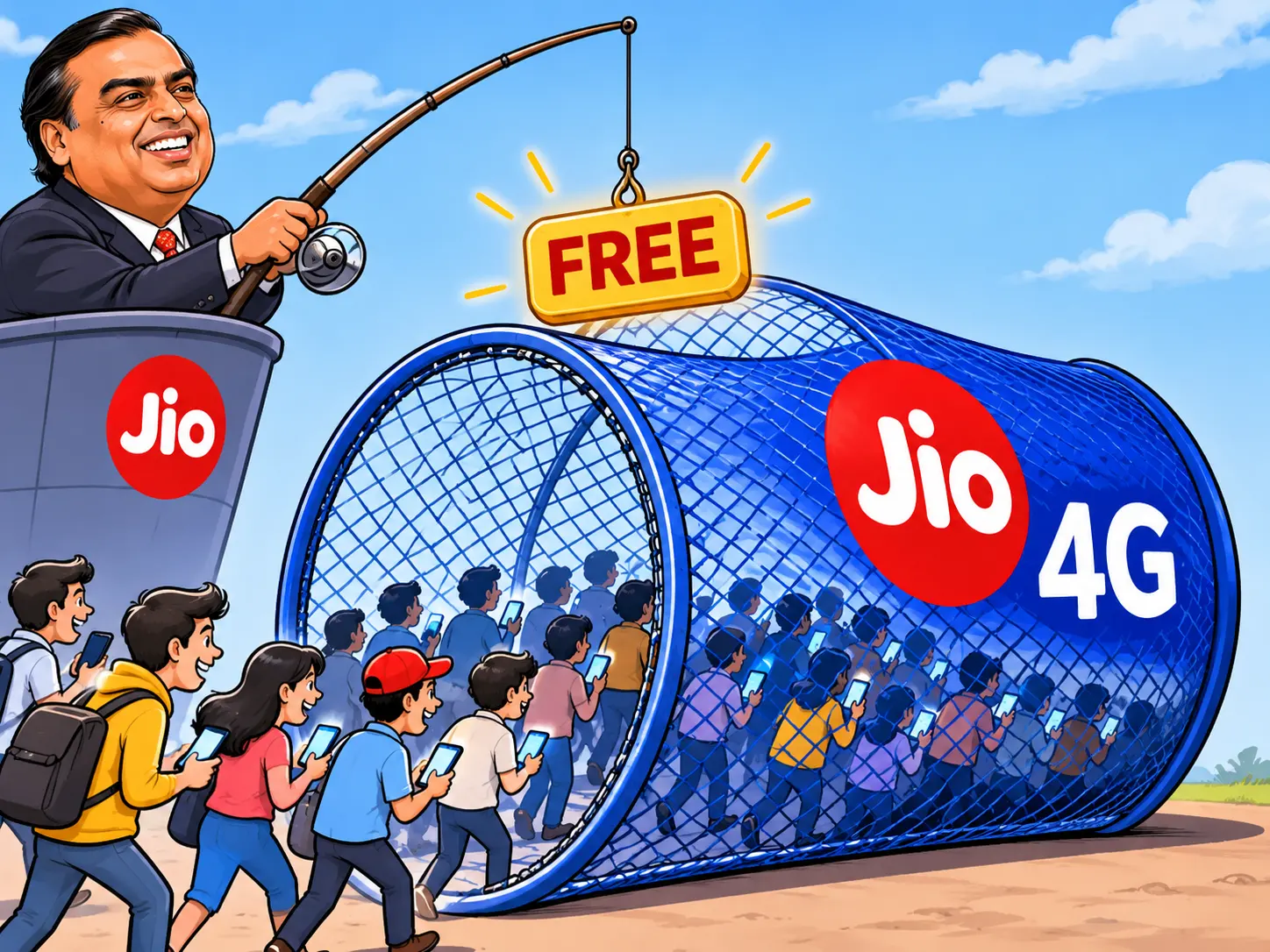
The free period was originally meant to run until the end of 2016, and it was then extended to March 2017. Millions of people who had never streamed a video suddenly watched YouTube all day, used WhatsApp video calls, and installed apps that previously felt too expensive to use. Behaviour changed first, and spending followed.
Jio Prime: the paid conversion
When the free window ended, Jio introduced Jio Prime at ₹99 for a year, paired with low-priced monthly plans. Users who had built daily habits had little reason to leave. This is the core of the free-to-paid funnel: make the free tier useful enough to change behaviour, then charge a small price for continuity.
JioPhone: reaching the next 400 million
In 2017, Jio launched a 4G feature phone for a refundable ₹1,500 deposit. That targeted users still on basic handsets and pulled them into the same network. Hardware, network and apps now worked as one system.
How fast Jio grew
Facebook timeline is an approximation for scale. Bar lengths are proportional to time taken.
Phase 2: How Jio Beat Its Competitors
Jio’s rivals faced an impossible choice. Matching free pricing would drain cash they did not have. Staying expensive meant watching subscribers walk. Between 2017 and 2019 the market consolidated fast.
| Company | What happened | Outcome |
|---|---|---|
 Aircel | Filed for bankruptcy in 2018 | Exited |
 Tata Docomo | Consumer mobile business merged into Airtel | Merged |
 Telenor India | Business absorbed by Airtel | Merged |
 Reliance Communications | Entered insolvency proceedings | Exited |
 Vodafone + Idea | Merged in 2018 to form Vi, still carrying heavy debt | Struggling |
 Bharti Airtel | Absorbed rivals’ customers and stayed competitive | Survived |
Number of private mobile operators
State-owned BSNL and MTNL operate separately. In practice the market became a Jio-Airtel duopoly with Vi a distant third.
Phase 3: The Data Price Crash, and the Rebound
The price of a gigabyte in India fell from roughly ₹250 to roughly ₹10-12, a drop of around 95%. Per-capita data use jumped, and India became one of the heaviest mobile data users in the world.
Approx price of 1 GB of mobile data
Approximate averages. Exact rates vary by plan and year.
But cheap data was never the endpoint. After the market consolidated, operators raised tariffs. In late 2019 prices went up, and in July 2024 all three major operators raised plan prices again by roughly 12-25%. Revenue per user climbed as the field narrowed.
Jio ARPU (average revenue per user, monthly, approx)
Rounded from company disclosures. Verify the latest quarter before publishing.
Phase 4: The Jio Ecosystem and Behavioural Data
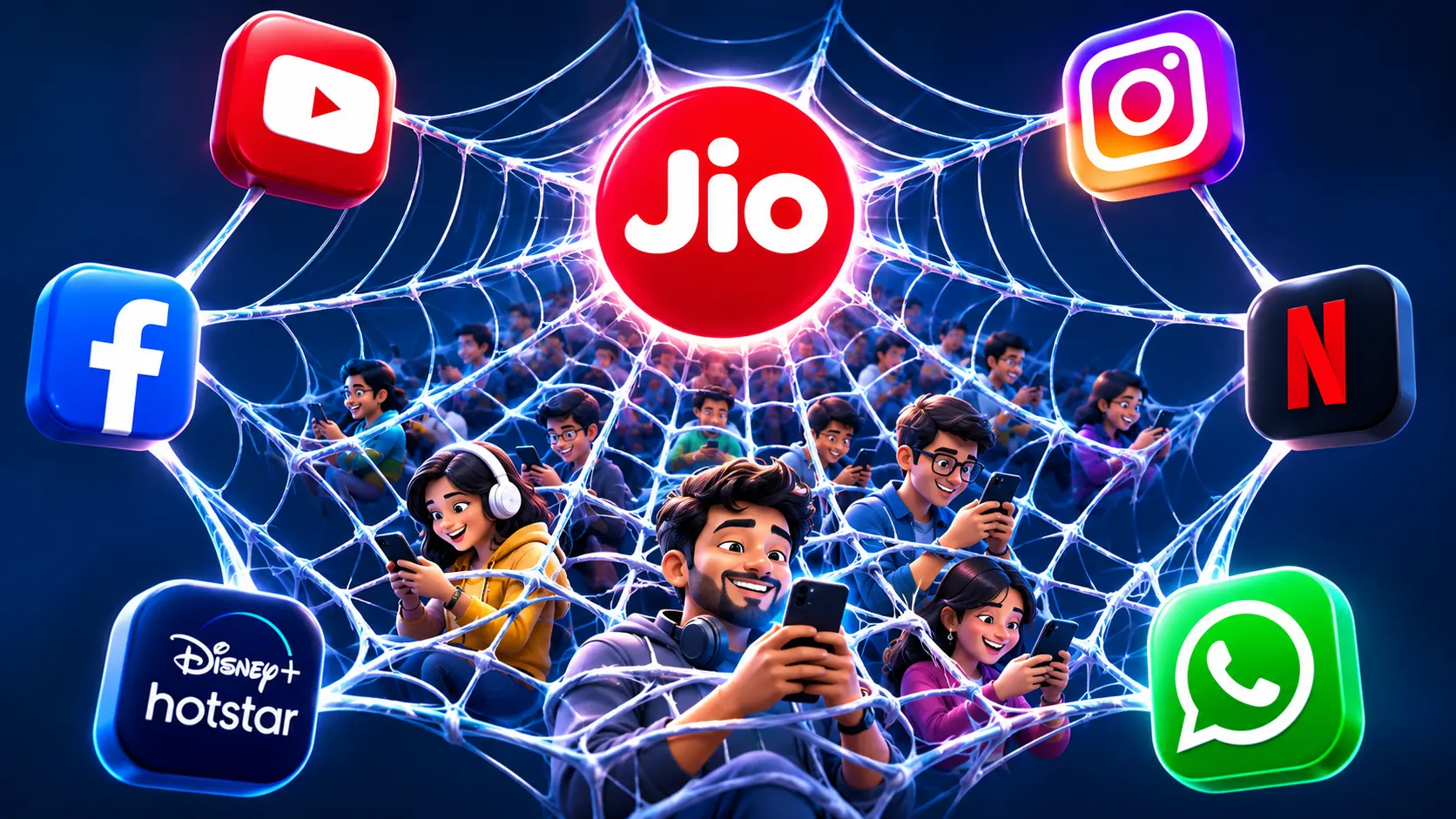
A phone number is a great identifier. Once hundreds of millions of people were on Jio, the group could learn what they watched, bought and paid for, and then launch products in each category.
Jio Ecosystem Map
 Streaming
 Music
 Commerce
 Jio Network
Core 4G / 5G
 JioCloud
Cloud Storage
 18,000+ Stores
 Joint Venture
How Jio funded the bet
In 2020, Jio Platforms raised about ₹1.5 lakh crore from a group of global investors. Facebook (now Meta) paid roughly $5.7 billion for about 10%, and Google invested around $4.5 billion for about 7.7%. Those investors still show up in the IPO shareholding. The money cleaned up the parent’s balance sheet and validated Jio’s valuation.
 Phase 5: IPL, Hotstar and the Media Play
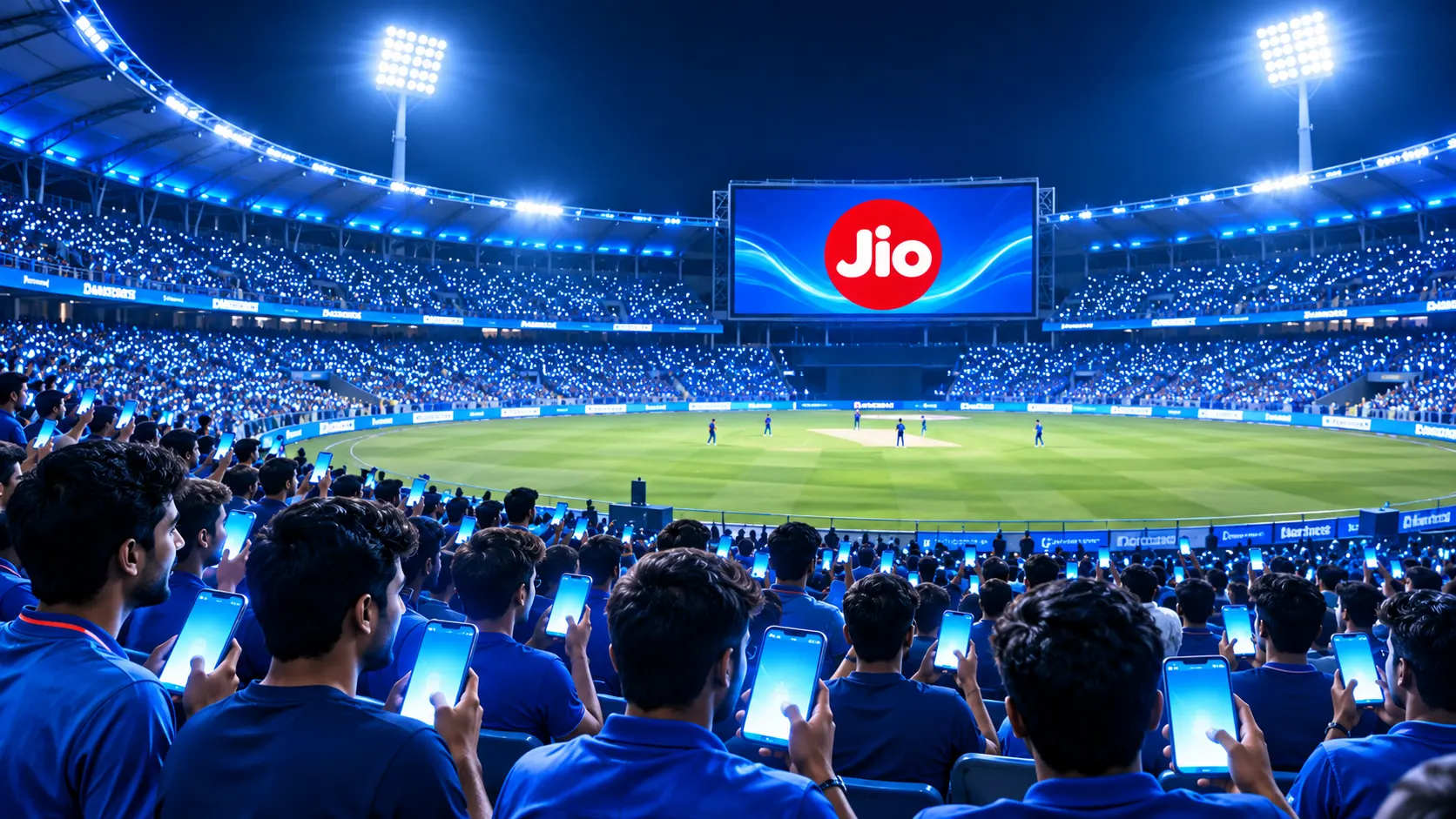
Cricket is the one product that reliably moves Indian streaming subscriptions. Disney+ Hotstar built a large paid base around IPL. Reliance went after that base directly.
Pricing during IPL season
Free streaming drove record concurrency, while Hotstar’s paid subscribers fell in 2023.
The checkmate: Reliance + Disney
In February 2024, Reliance and Disney announced a merger of their India media businesses, valued at about ₹70,352 crore (~$8.5 billion), with the Reliance-controlled side holding roughly 63%. The combined entity, JioStar, brought Star TV channels, Disney+ Hotstar and Viacom18 under one roof, and the streaming services were merged into JioHotstar in 2025.
Phase 6: The Jio Platforms IPO
The final step is the public market. Jio Platforms filed its draft papers in June 2026 and received SEBI’s final observations on 28 August 2026. The proposed issue is a fresh issue of up to 27 crore shares, reported at roughly ₹37,700 crore (about $3.8 billion), with no offer-for-sale component. About ₹27,500 crore is earmarked to repay borrowings at Reliance Jio Infocomm.
Reports value the company at around $137 billion, and the issue would be India’s largest public offering, ahead of Hyundai Motor India’s roughly ₹27,870 crore listing in 2024. As of the draft filing, Reliance Industries holds about 66.4%, with Meta and Google together holding around 17.7%.
Jio user base over time (approx)
Rounded approximations from public company reports.
Was It Fair? The Criticism
Rivals accused Jio of predatory pricing and of the network not offering enough interconnection capacity during the free period. The disputes went to the regulator and the courts. Another common complaint is that "free voice for life" ended: from October 2019, Jio began charging 6 paise per minute for calls to other networks.
The fairer reading is mixed. Consumers clearly benefited from lower data prices. At the same time, a market that went from ten-plus operators to effectively three raises ordinary competition concerns, especially now that tariffs are climbing.
5 Lessons for Business Owners
For small businesses and agencies, the practical version is a lead magnet that solves a real problem (an audit, a template, a mini-course), followed by a paid offer that feels like the obvious next step.
Frequently Asked Questions
What is Jio’s business strategy?
Jio used free, then very cheap, 4G data to acquire users at record speed, pushed rivals out or into mergers, and then monetised those users through an ecosystem of apps, retail, payments and media.
How did Jio make money if data was free?
The free period was a customer acquisition cost. Revenue followed from paid plans such as Jio Prime, the JioPhone, ecosystem services, advertising, and later tariff increases.
Which telecom companies shut down or merged after Jio launched?
Aircel went bankrupt, Tata Docomo’s and Telenor’s mobile businesses merged into Airtel, Reliance Communications went into insolvency, and Vodafone and Idea merged into Vi in 2018.
How did Jio get the IPL?
Viacom18, backed by Reliance, won the IPL digital rights for 2023-27 for about ₹23,758 crore and streamed the 2023 season free on JioCinema.
Is the Jio Platforms IPO happening?
SEBI issued final observations on 28 August 2026 for a fresh issue of up to 27 crore shares, reported at roughly ₹37,700 crore. Check the exchanges for the latest status.
Can a small business copy the Jio strategy?
Not literally. Jio had enormous funding and a network cost advantage. The transferable parts are the free-to-paid funnel and the focus on building habits.
Conclusion
The Jio business strategy was a sequence, not a single trick: build an unusually efficient network, give people a reason to change habits, outlast competitors, then monetise through scale and ecosystem. Whether you admire it or worry about market concentration, it is a masterclass in how timing, capital and customer behaviour combine.
Which part of the playbook would you borrow for your own business? Tell us in the comments, and explore more breakdowns from Infizy Promotions.



Discussion (0)
Leave a Reply
No comments yet. Be the first to start the discussion!